 Shiba inu
 Shiba inu is an Ethereum ERC-20 Token With Supply Burns and Shibarium
Shiba inu is a meme-themed digital token on Ethereum, a blockchain network, and follows ERC-20, a shared format for compatible tokens. Its ticker is SHIB. The contract records balances and transfers while Ethereum validators settle transactions, so users pay network fees in ETH. The token also operates across Shibarium through a separate mapped contract and bridge, where BONE pays gas. People hold, transfer, trade and spend SHIB, while burn mechanisms remove designated units from circulation. This guide focuses on the decisions that matter: supply math, contract identity, custody, fees, Shibarium and realistic alternatives.
Contents
A low unit price doesn't make SHIB cheap
Unit price means little without supply, so SHIB analysis starts with market capitalization and circulating units.
SHIB's Ethereum contract minted 1,000,000,000,000,000 tokens at deployment. It uses 18 decimals, so one SHIB divides into 1,000,000,000,000,000,000 base units. Those enormous counts make the displayed price look tiny without saying whether the network value is small or large. Market capitalization multiplies the circulating token count by the market price. Circulating supply excludes units that accepted accounting removes from active circulation. It changes when verified burns occur, while the original contract figure remains a useful construction reference. Liquidity answers a different question: how much a trade moves the quoted price. Keep those measures separate. The supporting detail is gathered in Shiba inu pricing.
A low quote also doesn't measure purchasing power. Pool depth, exchange order books and buyer demand determine the executable price. Compare the amount received after fees with the position size, then judge the exposure against the token's circulating supply. That sequence avoids treating a long string of decimal places as an investment thesis.
What does ERC-20 change for SHIB holders?
ERC-20 makes SHIB readable by Ethereum wallets and exchanges through one standard contract interface, as set out in Shiba inu walkthrough.
Ethereum Mainnet uses chain ID 1. Its SHIB contract address is 0x95ad61b0a150d79219dcf64e1e6cc01f0b64c4ce. Like every ordinary EVM address, that identifier contains 40 hexadecimal characters after a two-character 0x prefix, making 42 characters in total and representing 20 bytes. The ticker SHIB and token name are wallet labels; the chain and contract address identify the asset. Etherscan reads the same contract state that compatible wallets query. ERC-20 defines six core balance, transfer and allowance functions plus two events named Transfer and Approval.
Two transaction paths
Direct wallet transfer
A direct wallet payment calls the contract's transfer function once. The sender signs an Ethereum transaction, pays ETH for gas and names a 42-character recipient address. The SHIB contract subtracts base units from one balance and adds them to another. Wallet software converts those base units into the familiar 18-decimal display.
Contract approval
ShibaSwap and Uniswap use the approve and transferFrom path. An approval sets an allowance that lets a named contract move up to a stated amount. The later swap spends against that allowance. Approval and swap can therefore require two signatures and two Ethereum transactions. An allowance stays active until spending exhausts it or the holder changes it, so the approved amount deserves the same attention as the swap amount.
Wallet, network and contract checks before buying
The entry path works only when the wallet, network and SHIB contract all match.
MetaMask and Coinbase Wallet expose a software-held key, while Ledger and Trezor keep signing keys on dedicated hardware. In either model, the blockchain stores SHIB at an address; the device or app controls the key that authorizes changes. A centralized exchange instead records an internal account balance until withdrawal. Etherscan shows Ethereum activity, and Shibariumscan shows Shibarium activity; a balance on one network doesn't automatically appear on the other. The same 42-character address format works on both networks, which makes a network mismatch easy to overlook. Contract identity matters whenever a wallet imports a custom token.
Use this decision checklist before committing a purchase or transfer:
- Choose custody first: an exchange account suits internal trading, while on-chain payments and applications require a compatible self-custody wallet.
- Set the destination network to Ethereum Mainnet with chain ID 1 or Shibarium with chain ID 109.
- Match the contract: Ethereum SHIB uses 0x95ad61b0a150d79219dcf64e1e6cc01f0b64c4ce, while mapped Shibarium SHIB uses 0x495eea66B0f8b636D441dC6a98d8F5C3D455C4c0.
- Fund transaction gas with ETH on Ethereum or BONE on Shibarium before moving the full token balance.
- Read the final quote for SHIB received, pool fee and price impact, then keep enough gas currency for the next action.
A first on-chain swap also needs enough liquidity in the chosen pool. ShibaSwap and Uniswap quote from reserves, so the displayed output changes with route, trade size and intervening transactions. A centralized venue fills against its order book instead. Both paths create execution costs, yet only self-custody delivers an on-chain balance controlled by the user's key, as covered in practice.
How do supply burns affect Shiba inu?
SHIB burns lower circulating supply by moving tokens into designated addresses that don't return them to spendable circulation.
A burn transaction sends a specific quantity to an address that can't place those units back into circulation. SHIB's Ethereum contract doesn't expose a public mint function, and community burns don't create a claim on anyone else's holdings. They also don't rewrite market demand. If circulating supply falls 1%, market value stays unchanged only when price rises enough to offset that 1% reduction; markets don't enforce that relationship. The visible burn amount therefore matters alongside liquidity, trading demand and the time over which burns accumulate. Burn percentage against circulating supply is the useful ratio, not the raw token count alone.
ShibTorch links Shibarium activity to SHIB burns. Base-fee value accumulates in BONE, then the process converts eligible BONE into SHIB and sends the SHIB to the designated burn contract. Bridge burns mean something different. A Shibarium-to-Ethereum withdrawal burns the mapped representation and unlocks its Ethereum backing, preserving the 1:1 cross-chain accounting rather than shrinking economic circulation. Read the transaction type before counting any burn as supply reduction.
How does Shibarium change everyday SHIB use?
Closer to the ground, Shibarium shifts SHIB activity onto an EVM-compatible Proof-of-Stake network that uses BONE for transaction gas.
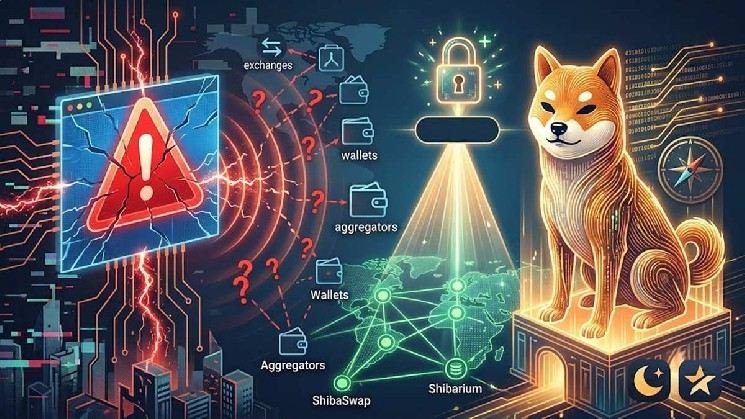
After the first pass, Shibarium identifies its main network with chain ID 109 and uses BONE as its native gas currency. Its architecture divides work across three named layers: Ethereum contracts, Heimdall validator and checkpoint logic and Bor block production. Bor executes Ethereum Virtual Machine contracts, while Heimdall relays checkpoints to Ethereum. This structure keeps routine execution away from Ethereum Mainnet, yet bridging and checkpointing still introduce cross-network steps. SHIB on Shibarium uses its mapped contract, 0x495eea66B0f8b636D441dC6a98d8F5C3D455C4c0.
Execution, checkpoints and fees
Network fees and exchange charges answer different questions. On Ethereum, SHIB actions pay gas in ETH, and 1 gwei equals 0.000000001 ETH. The transaction cost equals gas used multiplied by the base fee plus any priority fee. Shibarium charges gas in BONE under its own fee market. ShibaSwap v1 charges a fixed 0.3% swap fee. ShibaSwap v2 supports three documented pool tiers - 0.05%, 0.3% and 1% - so the route determines the liquidity-provider fee. Price impact remains separate and comes from trade size relative to pool reserves.
Moving SHIB between networks
The bridge maps assets 1:1: it locks Ethereum-side units and issues an equal mapped balance on Shibarium. Returning reverses that accounting through a mapped-token burn and an Ethereum unlock. The wallet address can remain the same, but the balances, gas currencies and transaction records belong to separate networks. Shibarium reduces the cost of repeated ecosystem actions only after the user accounts for the Ethereum-side bridge transaction and later exit.
From 2020 meme token to an ecosystem asset
SHIB's broad compatibility, not its mascot, explains why the 2020 token now spans payments, trading and on-chain applications.
The original role was simple: an ERC-20 token that communities could transfer and trade. Compatibility brought wallet support, exchange listings and automated-market-maker pools without a new base blockchain. ShibaSwap added swaps and liquidity functions, while Shibarium added a BONE-funded execution environment and mapped SHIB. Merchants can accept it directly or through payment processors, but settlement still follows the selected network's fees, confirmation policy and custody model.
Alternatives separate the job from the meme. Dogecoin uses ticker DOGE on its own Scrypt Proof-of-Work chain, targets one-minute blocks and issues 10,000 DOGE after each block from height 600000 onward. ETH is Ethereum's native gas and staking asset, while Circle's USDC targets a 1:1 dollar redemption unit. SHIB fits readers seeking an ERC-20 meme asset tied to ShibaSwap and Shibarium. The deciding constraint is utility, not the number of zeros in a quote.
Shiba inu - common questions
Can SHIB be mined with a computer?
SHIB can't be mined because its contract doesn't issue mining rewards. Ethereum validators stake ETH, while Dogecoin miners perform Proof-of-Work and receive DOGE. Buying, receiving or earning SHIB through an application changes existing balances; it doesn't mine new SHIB. Running Ethereum software also doesn't produce SHIB unless a separate application explicitly distributes existing tokens under its own rules.
Does SHIB automatically earn rewards while it stays in a wallet?
SHIB doesn't pay native reflection, interest or staking rewards merely because a wallet holds it. The token contract tracks balances and allowances. Any yield or reward comes from a separate exchange, liquidity pool or staking contract with its own terms and contract risk. A changing wallet balance should map to an on-chain transfer or application action; the base ERC-20 logic doesn't redistribute a percentage of every transaction to holders.
Which hardware wallets support SHIB?
Ledger and Trezor devices support Ethereum accounts that hold SHIB, while their companion software or a connected wallet displays the token. The hardware device stores signing keys, not token files; SHIB remains recorded against the Ethereum address. Confirm that the interface is using Ethereum Mainnet and the correct SHIB contract before sending. Shibarium support rests on whether the connected wallet accepts its EVM network settings and mapped token.
How long does an Ethereum SHIB transfer take to confirm?
Ethereum offers a new block opportunity every 12 seconds, but a SHIB transfer has no guaranteed wall-clock completion time. A wallet first broadcasts the ERC-20 transaction, then validators include it when the fee bid clears the market. Ethereum groups 32 slots into a 6.4-minute epoch, while exchanges and payment processors choose their own confirmation threshold. Congestion, a low fee cap or a recipient's policy can extend the wait.
Why isn't SHIB visible after a completed wallet transfer?
A completed transfer can exist on-chain even when the wallet hasn't added SHIB to its token list. Check the transaction on Etherscan, confirm the destination address and inspect the network selected in the wallet. On Ethereum, import the official SHIB contract with 18 decimals if the interface requires a custom token. A Shibarium balance uses a different mapped contract, so changing only the displayed network won't move funds between chains.
Are SHIB transactions reversible after confirmation?
Confirmed SHIB transfers aren't reversible through the ERC-20 contract. The transfer function updates balances at the destination address, and no card-style chargeback or administrator undo exists in SHIB's token logic. A recipient can voluntarily send an equal amount back in a new transaction, which requires another signature and another network fee. An exchange may manage internal balances under its own procedures, but that process sits outside the public token contract.
Does a SHIB transfer reveal my real identity?
A SHIB transfer records addresses, token amounts and transaction data on a public blockchain, but the ERC-20 contract doesn't store a person's legal name. An address becomes attributable when its owner publishes it or a service connects it to an account. Reusing one address also links that address's transaction history. Shibarium and Ethereum both expose on-chain activity through explorers, although their records sit on separate networks.
Is SHIB staking the same as Ethereum validator staking?
SHIB staking isn't Ethereum validator staking. Ethereum validators lock ETH at the protocol level and participate in consensus, whereas Shiba ecosystem staking uses application contracts for defined benefits. Bury 2.0 operates on Shibarium and ties locked ecosystem tokens to voting power. Its published rules set a maximum four-year lock and a 30% early-withdrawal penalty, while reward availability follows the application's rollout rather than Ethereum's validator rewards.